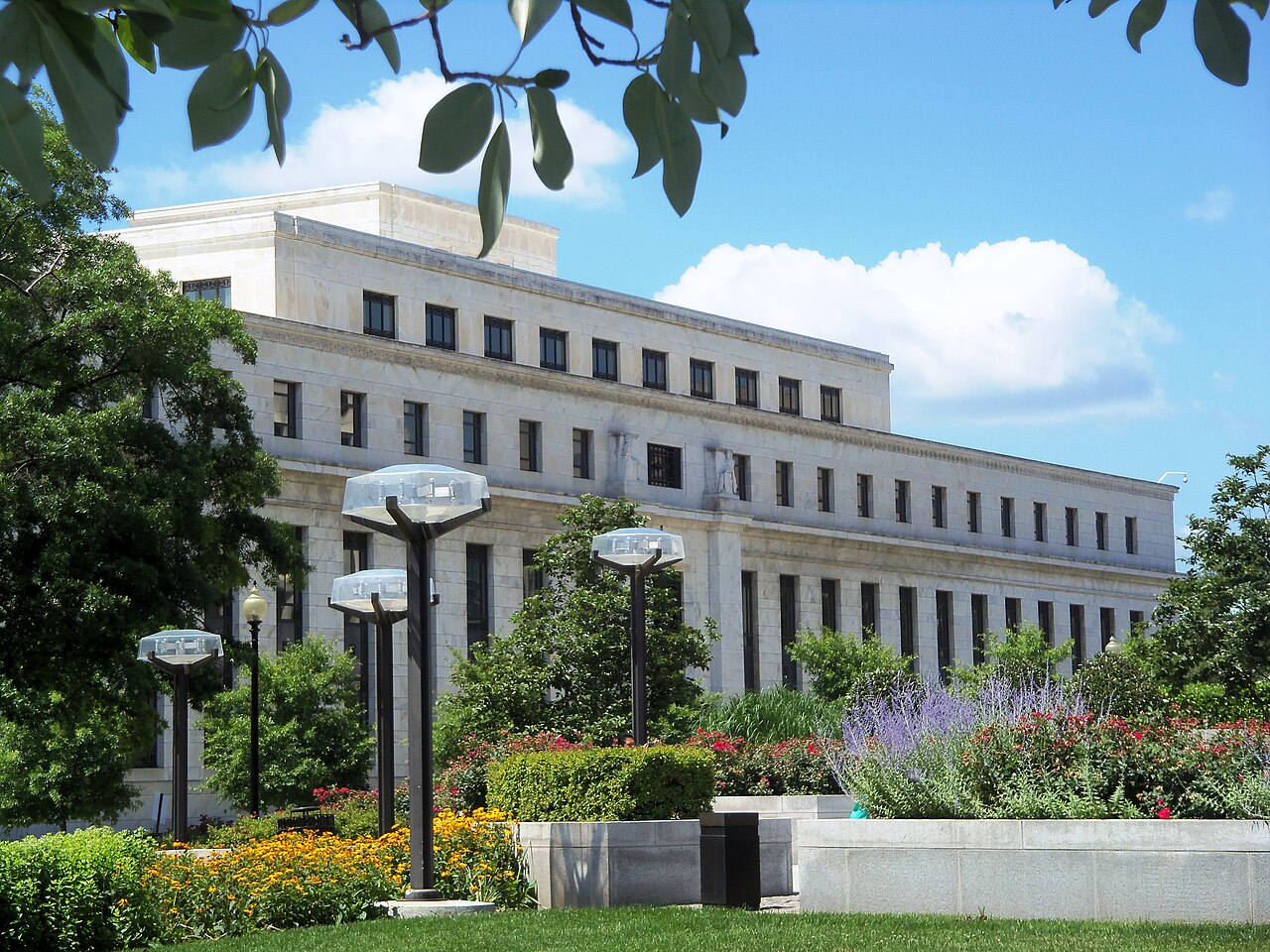
What Is the FOMC?
The FOMC is the branch of the U.S. Federal Reserve responsible for setting monetary policy. It meets eight times a year to review economic conditions and decide on the direction of interest rate policy in the United States.
The committee is made up of Federal Reserve Board members and regional Reserve Bank presidents. Their decisions are watched globally because U.S. monetary policy can influence currencies, bonds, equities, and commodities such as Gold, depending on broader market conditions.
What Does the FOMC Do?
The FOMC's primary responsibilities include setting the target range for the federal funds rate, guiding open market operations, and communicating the Fed's outlook on inflation and employment. These tools are meant to support the Fed's dual mandate of stable prices and maximum sustainable employment.
- Setting the federal funds rate target range
- Reviewing economic data such as inflation and labor reports
- Publishing forward guidance on future policy direction
- Releasing quarterly economic projections
What Happens on FOMC Day?
FOMC day typically follows a two-day meeting and culminates in a scheduled announcement, usually released in the afternoon U.S. Eastern time. Traders often mark this on their calendars well in advance because volatility can increase sharply around the release.
The sequence generally includes the rate decision and statement release, followed roughly thirty minutes later by a press conference from the Fed Chair. Markets, including Gold, may react at each stage as new information is digested.
Federal Funds Rate
The federal funds rate is the benchmark interest rate that influences borrowing costs throughout the U.S. economy. The FOMC sets a target range rather than a single fixed number, and changes to this range are among the most closely watched outcomes of each meeting.
Whether the committee raises, lowers, or holds the rate steady can shape expectations across bond, currency, and commodity markets. For Gold traders, the rate decision is one input among several used to gauge the broader monetary policy environment.
FOMC Statement
Alongside the rate decision, the FOMC releases a written statement summarizing its assessment of the economy and its policy stance. Analysts often compare the wording closely against previous statements to identify subtle shifts in tone.
Small changes in phrasing, such as how the committee describes inflation or labor market conditions, can shift market expectations even when the rate decision itself matches forecasts.
Economic Projections
Four times a year, the FOMC releases its Summary of Economic Projections, which includes forecasts for GDP growth, unemployment, and inflation. These projections give markets a sense of how policymakers view the economy's trajectory over the coming years.
Traders often compare updated projections to previous releases to see whether the committee's outlook has become more optimistic or more cautious, which can factor into broader market sentiment alongside other data.
Dot Plot
The dot plot is a chart included in the Summary of Economic Projections that shows individual FOMC members' anonymous expectations for where interest rates may head in future periods. Each dot represents one member's projection.
While the dot plot is not a formal commitment, it can meaningfully shift market expectations for future rate policy. Traders often watch whether the dots shift higher, lower, or stay consistent with prior projections.
Fed Chair Press Conference
Following the statement release, the Fed Chair holds a press conference to elaborate on the committee's reasoning and answer questions from reporters. This session often carries significant weight because it can add nuance beyond the written statement.
Markets sometimes react differently to the press conference than to the initial statement, since the Chair's tone and responses to specific questions can adjust expectations. This is one reason volatility can continue well after the headline rate decision.
Hawkish vs Dovish
Market commentary often describes Fed communication as “hawkish” or “dovish” as a shorthand for policy tone. These terms are simplifications, not fixed rules, and the actual market reaction can depend on many other factors happening at the same time.
| Hawkish | Dovish |
|---|---|
| Policy stance generally focused on controlling inflation and potentially maintaining tighter monetary conditions. | Policy stance generally more supportive of economic growth and easier monetary conditions. |
A hawkish tone does not automatically mean Gold will fall, and a dovish tone does not automatically mean Gold will rise. Actual price reaction depends on market expectations going into the meeting, positioning, yields, the U.S. Dollar, and overall risk sentiment. Treat hawkish or dovish framing as one input among many, not a guaranteed directional signal.
How Interest Rates Can Influence Gold
Gold does not pay interest, so changes in interest rate expectations can affect its relative appeal compared to yield-bearing assets. However, this relationship is not mechanical, and Gold's reaction to FOMC events depends on multiple factors working together rather than any single cause.
Prior market positioning, whether the outcome matched or surprised expectations, movement in Treasury yields, U.S. Dollar strength, and general risk appetite can all factor into how Gold responds. The same rate decision can produce different reactions depending on this broader context.
Learn about the Fed's preferred inflation indicator →FOMC and Treasury Yields
Treasury yields often move in response to shifts in interest rate expectations following an FOMC meeting. Since Gold is a non-yielding asset, changes in real yields are one of the factors traders may monitor when assessing Gold's relative attractiveness.
Rising yields do not automatically translate into a lower Gold price, and falling yields do not guarantee a higher one. The relationship can shift depending on inflation expectations, currency movement, and overall market sentiment at the time.
FOMC and the U.S. Dollar
The U.S. Dollar, often tracked through the DXY index, tends to be sensitive to shifts in Fed policy expectations. Since Gold is priced in dollars internationally, Dollar strength or weakness is commonly monitored alongside FOMC outcomes.
A stronger Dollar can make Gold relatively more expensive for holders of other currencies, while a weaker Dollar can have the opposite effect. This dynamic is one of several factors traders may weigh, rather than a standalone predictor of Gold's direction.
Why the First Market Reaction Can Reverse
It is common to see an initial, sharp move in Gold immediately after the FOMC statement, only to see that move partially or fully reverse within minutes or hours. This can happen as markets shift from a knee-jerk reaction to a more considered assessment.
During the press conference, additional context from the Fed Chair may adjust the overall interpretation of the meeting. Traders who react only to the first headline may find the broader market has repriced by the time the press conference concludes.
Because reactions can evolve over the course of FOMC day, some traders choose to wait for the press conference to conclude before drawing conclusions about the overall market tone.
What Gold Traders Should Watch
Rather than focusing on the rate decision alone, traders often track a combination of signals across the full FOMC release to build a more complete picture of market context.
- Whether the rate decision matched, exceeded, or missed expectations
- Changes in language within the FOMC statement compared to prior meetings
- Shifts in the dot plot and updated economic projections
- Tone and key phrases during the Fed Chair press conference
- Movement in Treasury yields and the U.S. Dollar (DXY) around the release
- Overall risk sentiment across broader financial markets
Some traders avoid placing new positions in the minutes immediately surrounding the release, choosing instead to observe how price, yields, and the Dollar behave together before considering their next step.
Key Takeaways
- The FOMC meets eight times a year to set U.S. monetary policy, including the federal funds rate target range.
- FOMC day includes a statement release followed by a Fed Chair press conference, and both can move markets.
- Hawkish and dovish are simplified labels for policy tone, not guaranteed predictors of Gold's direction.
- Gold's reaction to FOMC events depends on multiple factors, including Treasury yields, the U.S. Dollar, positioning, and risk sentiment.
- Initial market reactions on FOMC day can reverse as traders digest the full statement and press conference.
FAQ
Not necessarily. While higher rates can reduce the relative appeal of non-yielding assets like Gold, the actual reaction depends on whether the hike was expected, how yields and the U.S. Dollar respond, and broader market sentiment at the time.
The statement is a short written summary of the committee's decision and outlook, while the press conference allows the Fed Chair to elaborate and respond to questions. Markets sometimes react differently to each, since the press conference can add additional context.
Markets often price in expectations ahead of the meeting, so the actual outcome, tone of the statement, and press conference commentary can differ from what was anticipated. This can lead to reactions that differ from a simple textbook expectation.
No. The dot plot reflects individual committee members' projections at a point in time, not a formal commitment. These projections can and do change at subsequent meetings as economic data evolves.
Volatility can extend from the initial statement release through the press conference and sometimes into the following trading sessions, as markets continue to digest the full set of information and commentary.